
1, Finding and approaching the right customers
This is the problem that many businesses face. Even big firms still spend a lot of time and energy coming up with strategies and plans to find and attract more customers every day. For small businesses, it might be more difficult considering the scale of operation and tight budgets. Having a great product or service is not enough to let customers find and trust your business. Your team must go out and actively look for potential customers using a variety of strategies.
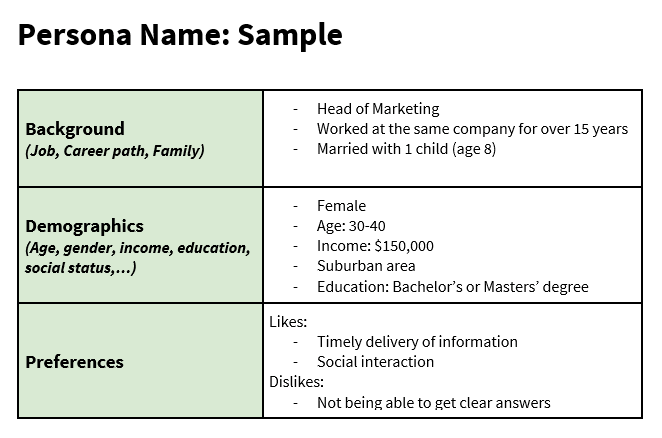
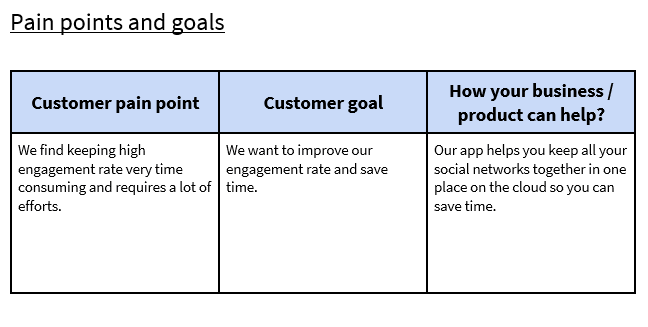
No matter what your strategy is, it is crucial to consider who your ideal customers are. Mass targeting doesn’t work on a tight budget, so you need to be careful about targeting the right consumer. Get started by crafting buyer personas: what they do, where do they spend time online, what are their buying behaviors, etc.
Here is a persona template for you to get started:
2, Raising brand awareness
Brand awareness is extremely important for every business to grow. It represents how familiar your customers are with your brand and how well they recognize it. Raising brand awareness helps your customers remember your brand better, build trust over time and increase your company’s value. In other words, once your customer is aware of a brand, they start to recognize it, make a purchase, prefer it to other brands, and trust the brand more overtime. This means that they will be likely to make more purchases in the future and recommend the service/product to their friends and families as well.
Here are a few ideas to boost your brand awareness:
- Offer freemium: Offering a free basic product/service line and only charging for products at the premium level is a very popular (and effective) strategy for software companies like Hubspot, Typeform or Hootsuite. This gives consumers a free chance to experience the product/service before purchasing, and the company will get free advertising when consumers use it.
- Co-marketing: Partnering up with another company can help you get a better reputation and awareness outside of your circle. Unlike co-branding, co-marketing doesn’t involve releasing new products/services and are easier to plan, launch and manage. It provides a win-win situation for both companies to reach a wider market, learn more about customers and earn better attention.
3, Hiring talent
Hiring talented people remains one of the biggest challenges for businesses, according to the Conference Board Annual Survey. Hiring new people is a complex process that requires a lot of time and money. It is easy to just send out a job description, screen applicants, and make a decision. But how do you make sure that the candidate is the right one for the job?
To answer this question, companies can create a candidate persona, which is like the buyer persona described above, but for candidates. This persona should showcase the ideal traits and skills suitable for the job and align with the company culture. Finally, don’t forget to measure the results to better tailor your hiring strategies in the long term.



 Tax time is one of the few times of the year where keeping an absurd amount of paper in your possession is socially acceptable. But while most of us can confide in our receipts to keep us safe navigating our tax return, receipts aren’t always enough – especially if you get audited by the ATO.
 When you are paying your employees, there are certain parties you need to withhold amounts from and instead send this to the ATO. This is to ensure these parties don’t have to pay larger amounts of unnecessary tax at the end of the year. We’ve put together a handy guide to make sure you don’t get caught out heading into the end of the financial year.
  they will be affected by the result of the Election.